

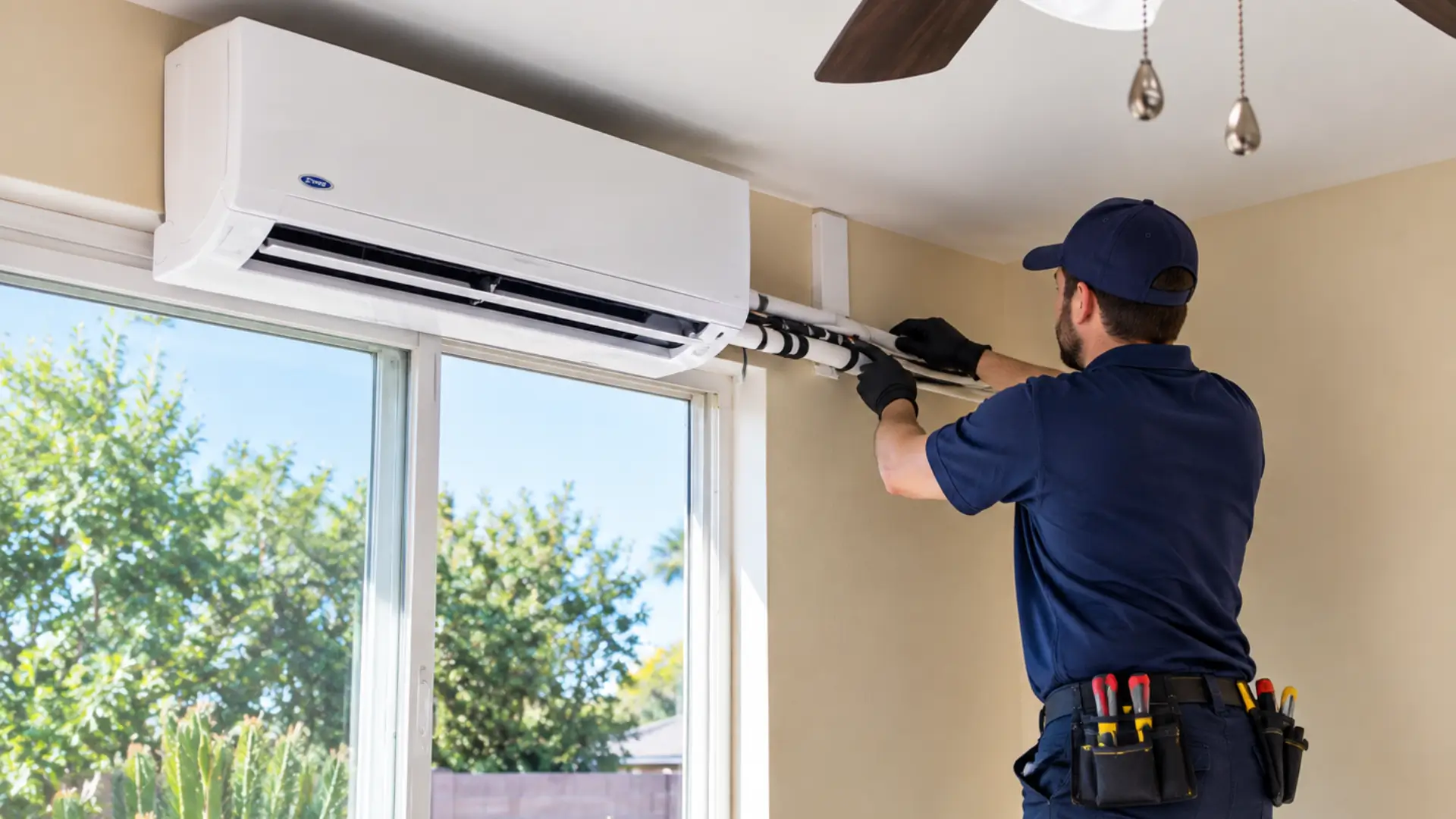
Ductless Mini Split in Bowling Green, KY
Need heating and cooling for a room without ductwork? A ductless mini-split can condition a garage conversion, home addition, upstairs bedroom, or other space that your central HVAC system struggles to keep comfortable.
Bowling Green HVAC provides ductless mini-split installation solutions for spaces that need independent temperature control. Whether you need one indoor unit for a single room or multiple units for different areas, the right setup depends on your property’s layout, heating and cooling requirements, and installation conditions.
Planning a ductless system? Contact Bowling Green HVAC to discuss your space, installation options, and project requirements
Ductless Mini-Split Installation for Homes and Businesses
A ductless mini-split uses an indoor unit connected to an outdoor unit through refrigerant lines, electrical wiring, and condensate drainage. Instead of distributing air through a network of ducts, the indoor unit conditions the space where it is installed.
This makes mini-splits an option for properties where extending existing ductwork would be difficult, disruptive, or impractical.
Ductless mini-split installation can be worth considering for:
Garage conversions:
Add heating and cooling to a converted garage or workshop when the space is suitable for conditioning.
Home additions:
Condition a new room without extending the home’s entire duct system.
Older homes:
Add heating and cooling where installing conventional ductwork would require significant modifications.
Upstairs bedrooms:
Address a room that remains uncomfortable even when the central HVAC system is running.
Home offices and sunrooms:
Maintain more direct temperature control in frequently used spaces.
Small commercial spaces:
Consider separate temperature control for offices, workrooms, or other suitable areas.
The right solution depends on the space, equipment requirements, and whether a ductless system is compatible with the property’s existing HVAC setup.
How Ductless Mini-Split Systems Work
A mini-split system has an outdoor unit and one or more indoor units connected by refrigerant lines.
During cooling, the system transfers heat from indoors to the outside. A ductless heat pump can reverse this process to provide heating during colder weather.
There are two common configurations.
Single-Zone Mini-Split Systems
A single-zone mini-split typically connects one indoor unit to one outdoor unit. It is designed to heat and cool a specific room or defined area.
A single-zone system may suit a garage conversion, home addition, sunroom, bedroom, or office that needs its own temperature control.
The unit’s capacity and placement should match the room’s size, layout, insulation, windows, and other factors affecting its heating and cooling load.
Multi-Zone Mini-Split Systems
A multi-zone mini-split connects multiple indoor units to a compatible outdoor unit. Each indoor unit can provide temperature control for its designated zone, subject to the system’s operating requirements.
A multi-zone setup may suit a home with several rooms that need separate temperature control or a property without suitable ductwork.
The number of indoor units depends on the selected equipment and the requirements of each space. Each room needs to be assessed so the complete system can provide the required heating and cooling.
Choosing the Right Mini-Split for Your Property
Not every room needs the same equipment, and choosing a system based only on square footage can lead to poor results.
Before recommending a ductless mini-split, the installation assessment should consider the following.
Room Size and Heating and Cooling Load
The unit needs enough capacity to handle the space’s heating and cooling demand. Room dimensions, ceiling height, windows, insulation, air leakage, occupancy, and sun exposure can all affect the required capacity.
A load calculation helps determine the appropriate equipment size rather than relying on a general rule of thumb.
Indoor Unit Placement
The location of the indoor unit affects airflow and how evenly the room is conditioned. Placement should account for the room layout, mounting requirements, furniture, and the manufacturer’s installation instructions.
Outdoor Unit Location
The outdoor unit needs suitable clearance for airflow, access for service, and protection from avoidable obstructions. The installation location should also account for the refrigerant-line route and drainage requirements.
Electrical Requirements
The selected system must be compatible with the property’s electrical service and circuit requirements. Electrical work or upgrades may be necessary depending on the existing setup.
Heating Performance
If you want a system that provides heating as well as air conditioning, the equipment must be selected for the home’s winter heating requirements. Heating capacity and performance at lower outdoor temperatures should be considered before choosing a model.
Ductless Mini-Split Installation Process
A proper installation involves more than mounting an indoor unit and placing an outdoor unit outside. Equipment selection, connections, drainage, and system testing all affect performance.
1. Evaluate the Space
Review the room layout, insulation, windows, electrical requirements, and available locations for the indoor and outdoor equipment.
2. Select the System
Determine whether a single-zone or multi-zone mini-split is appropriate. The equipment capacity and configuration should match the heating and cooling needs of the space.
3. Plan Equipment Placement
Identify suitable locations for the indoor unit, outdoor unit, refrigerant lines, electrical connections, and condensate drain. The installation plan should minimize unnecessary routing while meeting manufacturer requirements.
4. Install the Indoor and Outdoor Units
Secure the equipment and prepare the connections according to the manufacturer’s instructions. The wall opening and mounting arrangement depend on the selected system and site conditions.
5. Complete Connections and System Setup
Connect the refrigerant piping, electrical components, and condensate drainage. Refrigerant handling, evacuation, leak checks, and other required procedures should be completed using the appropriate equipment and methods.
6. Test System Operation
Verify the system’s operation, controls, airflow, and drainage. For a heat-pump model, check the applicable heating and cooling functions according to the manufacturer’s commissioning requirements.
7. Review System Operation
Before the job is considered complete, the owner should understand the basic controls, filter care, and recommended maintenance for the installed equipment.
Installation time varies with the number of indoor units, equipment type, access, electrical work, and other site-specific requirements. A straightforward single-zone installation and a multi-zone project may require different schedules.
Ductless Mini-Split Installation Cost in Bowling Green, KY
The cost of ductless mini-split installation depends on the equipment and the work required at your property. A single-zone installation generally involves a different scope from a multi-zone system serving several rooms.
Key cost factors include:
- ✓ Number of indoor units: Each additional zone affects equipment selection and installation work.
- ✓ System capacity: The required heating and cooling output influences which model is appropriate.
- ✓ Equipment efficiency and features: Models differ in performance, controls, and available functions.
- ✓ Electrical requirements: Additional circuit work or electrical upgrades may affect the project cost.
- ✓ Installation access: Wall construction, equipment placement, and refrigerant-line routing affect labor.
- ✓ Drainage requirements: The condensate drain must be routed appropriately for the installation.
- ✓ Existing HVAC equipment: Compatibility with a central system or other existing equipment can affect the installation plan.
- ✓ Additional modifications: Changes to the mounting location or installation area may require extra work.
Ask for an estimate that identifies the equipment, number of zones, installation work, and any additional modifications. This helps you compare quotes based on the actual scope of the job.
Ductless Mini-Splits for Bowling Green, KY Homes
Bowling Green experiences hot, humid summers and winter cold spells. A ductless system should be selected to provide the cooling capacity required during summer and, if it is a heat pump, the heating performance needed in colder weather.
For homes in Bowling Green and Warren County, the installation assessment should consider the conditions affecting the specific room.
Garage conversions:
Check insulation, air leakage, electrical requirements, and whether the space is suitable for year-round conditioning.
Older homes:
Consider the building layout and whether installing conventional ductwork would require substantial changes.
Room additions:
Determine whether a separate mini-split is more practical than modifying the existing central HVAC system.
Upstairs rooms:
Evaluate the room’s heat gain, insulation, and existing airflow before selecting equipment.
Home offices and sunrooms:
Consider windows, sun exposure, occupancy, and how often the room is used.
A ductless system should be sized for the space it serves. The right capacity and placement matter more than simply choosing a unit because it is advertised for a particular room size.
Can a Mini-Split Work With Your Existing HVAC System?
Yes, a ductless mini-split can sometimes complement an existing central heating and cooling system.
For example, a home may use central HVAC for most rooms while a mini-split provides separate temperature control in an addition, converted garage, or upstairs room.
The systems should be assessed together to determine which spaces each unit will serve and whether the proposed setup makes sense for the property’s heating and cooling needs.
A ductless unit is not automatically the best option for every uncomfortable room. In some cases, duct leakage, restricted airflow, insulation problems, or incorrect central-system sizing may be contributing to the issue. Identifying the cause helps you choose the right solution.
Ductless Mini-Split Repair and Maintenance
Like other HVAC equipment, ductless systems need maintenance and occasional repairs. If you already have a mini-split, arrange an inspection when you notice:
Reduced heating or cooling performance
Water leaking from an indoor unit
Persistent ice buildup
Unusual grinding, rattling, or buzzing noises
Controls that do not respond properly
Unexpected increases in energy use
An indoor unit that repeatedly stops operating
Some problems involve a single indoor unit, while others can affect the outdoor unit or shared system components. The cause should be diagnosed before deciding what needs repair.
Routine maintenance should follow the manufacturer’s instructions and may include filter care, inspection of coils and drainage, and checks of system operation. If the issue involves refrigerant or electrical components, use a qualified HVAC professional.
Why Choose Bowling Green HVAC for Ductless Mini-Split Installation?
Choosing a ductless system involves more than selecting a brand or deciding where to mount the indoor unit. The equipment needs to suit the space, the installation needs to meet manufacturer requirements, and the finished system needs to operate as intended.
When planning your mini-split installation, look for clear answers about:
- ✓ Single-zone and multi-zone equipment options
- ✓ System sizing and heating capacity
- ✓ Indoor and outdoor unit placement
- ✓ Electrical and drainage requirements
- ✓ Installation scope and total estimated cost
- ✓ System testing and maintenance requirements
Bowling Green HVAC helps you focus on the practical considerations involved in planning a ductless heating and cooling system.
When Ductwork Isn’t an Option
Garages
Safety codes don’t allow ducts in garages — carbon monoxide and pollutants can travel through ductwork into your living spaces.
Old Homes
Old homes often can’t fit ducts inside their walls without tearing the place apart.
New Additions
For a new addition, running all-new ductwork can cost more than the cooling is worth.
That’s where a ductless mini-split earns its keep. No ducts, no tearing open walls, no compromises. Just an indoor unit on the wall and an outdoor unit outside, connected through the wall — heating and cooling exactly where you need it.
Frequently Asked Questions About Mini-Split Installation
It depends on how many indoor units you need, the system’s capacity, and how complex the installation is — a single-zone job costs less than a five-zone setup. Discuss the scope and estimate with the provider before deciding.
A single-zone mini-split is often done in under half a day. Multi-zone systems take longer depending on the number of indoor units — we’ll give you a clear timeline with your estimate.
Yes — ductless heat pump models reverse the refrigerant flow to heat in winter and cool in summer. They’re a strong fit for Bowling Green’s climate, where winters are mild enough for heat-pump heating to work efficiently.
Most residential outdoor units support two to five indoor units. During your evaluation, we’ll map your rooms and recommend the right combination.
Absolutely. This is one of the most common setups we install — central air where ductwork exists, ductless mini-splits for the garage, addition, or rooms the ducts never reached.
A mini-split may be suitable for a garage or converted garage when the space, equipment, and installation meet applicable requirements. Insulation, electrical capacity, outdoor-unit placement, and the intended use of the space should be evaluated first.
Neither option is automatically better for every home. A mini-split can suit spaces without ductwork or rooms that need separate temperature control. Central air conditioning may be practical when a suitable duct system already serves the home. The best choice depends on the building, existing equipment, and comfort requirements.
Yes. Filter care, coil and drainage inspections, and equipment checks help keep the system operating properly. Follow the manufacturer’s maintenance instructions and arrange professional service when performance changes or a fault develops.
Related Services: AC Repair · AC Installation · AC Maintenance · AC Cleaning
Proudly Serving: Russellville · Scottsville · Franklin · Glasgow · Alvaton · Auburn
Schedule Your Ductless Mini Split Installation & Repair in Bowling Green, KY
Searching for mini-split installation or repair near me in the Bowling Green area? You’re looking at them. Get zoned comfort exactly where you need it — new systems installed cleanly in a day, existing ones repaired right the first time. Discuss the scope and estimate with the provider before deciding.
Request your free mini-split estimate today — and stop letting one uncomfortable room run your whole house.
Book Your ServiceAbout Us
Since 2019, Bowling Green HVAC has provided professional heating and air conditioning services in Bowling Green, KY. We focus on honest HVAC work, clear recommendations and practical solutions for residential heating and cooling systems.
OUR ADDRESS
🏢 Bowling Green HVAC
446 E Main Ave, Suite 200
Bowling Green, KY 42101
📞 Call us (555) 123-4567
📧 [email protected]
🕐 Open 24/7
Areas We Serve
We proudly serve
Copyright © 2026 Bowling Green HVAC. All rights reserved. | Privacy Policy